Today’s housing market splits into four distinct types. You’ve got cash buyers, buyers financing a purchase, owners who feel locked into a low rate, and builders with homes to sell.

Dated: September 23 2026
Views: 6
When people are considering moving to Greenville, I hear plenty of questions about the usual things.
What's downtown like?
How are the restaurants?
How close are the mountains?
Where's the Swamp Rabbit Trail?
How's the airport?
All good questions.
But here's one I don't hear nearly enough:
“What do you do on a Thursday night?”
Because eventually you aren't relocating anymore.
You're just living here.
And that's when things like concerts, museums, theater, galleries, symphonies and live music start becoming a much bigger part of the quality-of-life equation.
Greenville does surprisingly well in that department.
Actually, scratch “surprisingly.”
We do really well.
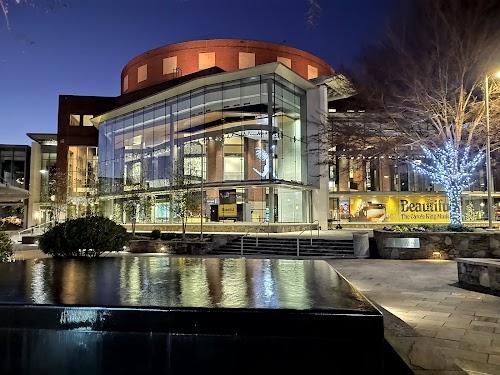
It's difficult to imagine downtown Greenville today without the Peace Center.
But when it opened in 1990, downtown Greenville was still very much a work in progress.
The Peace Center itself describes its arrival as part of the spark that helped accelerate downtown revitalization. Since opening, an economic-impact study commissioned by the organization estimates its cumulative economic impact at about $958 million in Greenville County and nearly $1.1 billion statewide.
Those are big numbers.
But I think the more interesting impact is much simpler.
It gave people another reason to come downtown.
Dinner.
A Broadway show.
A Greenville Symphony performance.
A concert.
Walk along the Reedy River afterward.
Maybe dessert.
Maybe a drink.
Maybe you suddenly remember you're 59 years old and should have gone home an hour ago.
Hypothetically speaking. 😂
Today the Peace Center says it welcomes more than 350,000 patrons to 400-plus performances and events each year.
That's not a side attraction.
That's part of Greenville life.
Here's the timely part of today's story.
This year the Peace Center opened two additional music venues in repurposed historic downtown buildings: The Mockingbird and Coach Music Factory.
And I really like what they've done.
The Mockingbird is an intimate listening room created by combining and repurposing the historic Markley and Gullick buildings. It seats just 180 people.
That means singer-songwriters, jazz, acoustic music and artists where you actually want to hear the person perform rather than spend the evening watching them on a giant video screen.
Then there's Coach Music Factory.
It's almost the opposite.
The historic downtown carriage factory has been turned into a multi-level, standing-room music venue with capacity for 1,100 people, geared toward everything from country and rock to alternative music.
So within essentially the same downtown arts campus you can now have:
Broadway.
The symphony.
A 180-seat listening room.
An 1,100-person music club.
Outdoor performances.
And smaller theater productions.
That's a pretty serious entertainment lineup for a city Greenville's size.
I'm not turning this into an event roundup—I promise. 😂
But this coming weekend illustrates the point.
The Greenville Symphony Orchestra opens its season Saturday and Sunday at the Peace Center with Mozart's Requiem, joined by singers from Clemson University and Furman University.
Meanwhile, The Mockingbird has music Friday and Saturday.
And beginning September 29, the Broadway musical Maybe Happy Ending arrives at the Peace Center for a six-day run.
That's what I'm talking about.
You don't have to plan a cultural weekend in Greenville six months in advance.
Sometimes you simply look at what's happening and say:
“Well, that sounds fun.”
A few blocks north is Greenville County Museum of Art.
Admission?
Free.
And we're not talking about a little room with seven paintings somebody found in a storage closet.
The museum holds the world's largest public collection of watercolors by Andrew Wyeth, along with significant works by Jasper Johns, who grew up in South Carolina.
Its collection also includes work by Mary Cassatt, Georgia O'Keeffe, William H. Johnson, Kara Walker and David Drake, the enslaved South Carolina potter and poet.
The museum says it welcomes more than 75,000 visitors annually.
And right now there's an especially good reason to visit.
The exhibition Andrew Wyeth: Eight Decades of Watercolors is currently on view, drawing from the museum's permanent collection.
One important tip: works from the Wyeth and Jasper Johns collections aren't always on display, so if you're coming specifically to see one of those collections, check the current exhibitions before you go.
That's the kind of local knowledge that prevents an awkward:
“Eric said this was here.”
😂
The museum sits on Heritage Green, only about three blocks from Main Street.
And this is another Greenville amenity I think newcomers overlook.
Within this compact cultural campus you'll find the art museum, the Upcountry History Museum, the The Children's Museum of the Upstate, Greenville's main library and theater facilities.
The Children's Museum alone contains more than 80,000 square feet of play-based learning space with about 30 exhibits. It's one of the largest children's museums in the world and was the first children's museum recognized as a Smithsonian Affiliate.
Think about that from a relocation perspective.
Grandkids visiting?
Rainy Saturday?
Want to learn more about Upstate history?
Art museum?
Library?
You've got options sitting practically next door to one another.
And you're still only a few blocks from Main Street.
You don't even have to walk into a museum.
The City of Greenville maintains a public-art collection spread throughout the city that includes sculptures, statues and murals. The city even maintains an online map and database so you can explore the collection yourself.
That's something I think adds a lot to downtown without people consciously noticing it.
You turn a corner and there's a sculpture.
A mural.
Something interesting in a plaza.
Public art makes a city feel less like a collection of buildings and more like a place somebody cares about.
And Greenville has become pretty intentional about that.
If you know me, you know music has always been part of my life.
I'm a drummer.
I play at church.
And while I'm perfectly capable of appreciating a quiet evening at an art museum...
put me in a room with a good rhythm section and we've got something. 🥁😂
So I probably pay more attention than some people to the music side of Greenville.
And that's why I'm particularly excited about what the Peace Center has done this year.
Not every concert belongs in a 2,000-seat hall.
Some music needs a smaller room.
Some needs standing room.
Some needs an orchestra.
Some needs a guy with a guitar sitting 20 feet away.
Now Greenville has more of those choices.
That's a healthy arts scene.
Here's where I think relocation research often goes wrong.
People compare cities using spreadsheets.
Taxes.
Home prices.
Airport distance.
Weather.
Population.
All useful.
But you aren't going to experience your new hometown as a spreadsheet.
You're going to experience it on a Wednesday night when somebody says:
“Want to go do something?”
That's why restaurants matter.
Parks matter.
Trails matter.
Universities matter.
Museums matter.
Live music matters.
Theater matters.
Coffee matters.
Coffee obviously matters considerably more than several of the others, but I'm trying to remain objective. ☕😂
These are the things that turn a place you moved to into your hometown.
Growth gets talked about constantly around here.
More houses.
More apartments.
More traffic.
More people.
But I think there's another question worth asking:
Is Greenville becoming a more interesting place to live as it grows?
In this case, I think the answer is pretty clear.
The Peace Center didn't simply add seats in 2026.
It added different kinds of experiences.
Historic buildings were reused rather than demolished.
Smaller artists now have a room that fits them.
Larger standing-room shows have a home.
The symphony still plays next door.
Broadway is coming through.
And a few blocks away, you can walk into a nationally significant art museum without paying admission.
That's good city-building.
And it's one more reason I enjoy telling people about Greenville.
My Why Greenville SC guide is designed to help people understand these lifestyle pieces before they start deciding where to live.
When you're ready to explore the housing side, you can browse Greenville and Upstate homes for sale.
And if Greenville is part of your retirement plan, access to arts, culture, lifelong learning and entertainment is one more piece worth considering. I've built a separate resource at Retiring in Greenville SC.
If you're considering relocating here, don't spend your entire visit touring neighborhoods.
Pick one evening and live here.
Go downtown.
Have dinner.
See a show.
Or spend an afternoon on Heritage Green.
Walk through the art museum.
Visit the history museum.
Then walk the three blocks back toward Main Street.
Pay attention to how close everything is.
Because that's something that's difficult to capture in a “Top 10 Reasons to Move to Greenville” list.
Greenville is increasingly easy to participate in.
You don't simply look at the city.
You can actually use it.
And after spending most of my life here, I think that's one of the best things about what Greenville has become.
I'm Eric Mitchell, a longtime Greenville local and Realtor®, and helping people discover the Greenville beyond the real estate listings is one of my favorite parts of what I do.
Who you hire matters.
Call, text or email... I promise, I won't leave you hanging.
Greenville has a substantial mix of performing and visual arts institutions. The Peace Center alone reports more than 350,000 patrons attending 400-plus performances and events annually, while Greenville also has the Greenville County Museum of Art, Greenville Symphony Orchestra, Ballet Greenville, Upcountry History Museum, Children's Museum of the Upstate and a citywide public-art collection.
Yes. Touring Broadway productions regularly play the Peace Center Concert Hall. The current 2026 schedule includes Maybe Happy Ending from September 29 through October 4.
Yes. General admission to the Greenville County Museum of Art is currently free. The museum is open Wednesday through Saturday from 10 a.m. to 5 p.m. and Sunday from 1 to 5 p.m.; it's closed Monday and Tuesday.
The Greenville County Museum of Art holds the world's largest public collection of Andrew Wyeth watercolors and an important collection of works by South Carolina-raised Jasper Johns. Its broader collection surveys American art with a particular emphasis on artists and works connected to the South.
Heritage Green is a cultural campus just a few blocks from Greenville's Main Street. It includes the Greenville County Museum of Art, Upcountry History Museum, Children's Museum of the Upstate, Greenville County's main library and other cultural organizations.
The Peace Center opened two new venues in 2026. The Mockingbird is an intimate 180-seat listening room created from historic downtown buildings, while Coach Music Factory is a multi-level standing-room venue with capacity for about 1,100.
It can be an appealing choice for someone who values performing arts, museums, music and lifelong learning. One advantage is that many major cultural destinations are concentrated downtown, while institutions such as Furman University also provide public programming. Housing location, transportation and your preferred level of walkability are worth considering alongside the cultural amenities.
Not at all. Many established Greenville neighborhoods and surrounding communities are within a reasonable drive of downtown. If concerts, theater and restaurants are a major part of your lifestyle, however, I'd consider how often you'll use them when comparing locations rather than focusing only on the house.

With 28 years of experience in media marketing sales and an in-depth knowledge of every corner of the Greenville market, I’ve built my real estate career on one simple principle: exceptional com....
Today’s housing market splits into four distinct types. You’ve got cash buyers, buyers financing a purchase, owners who feel locked into a low rate, and builders with homes to sell.
🎭 Greenville’s Arts Scene Is Much Bigger Than You Might ThinkWhen people are considering moving to Greenville, I hear plenty of questions about the usual things.What's downtown like?How are
Is Now a Good Time to Buy a Home in Greenville SC? What the Latest Market Data Really SaysIf you've watched the news lately, I understand why you might be nervous about buying a house.Mortgage rates
August confirms two different markets operating at once:Greater Greenville sales remain surprisingly resilient.Spartanburg is slowing much more noticeably.Mortgage rates have now risen three weeks
 Information deemed reliable but not guaranteed.
Property information provided courtesy of the Internet Exchange Program of the Greenville Association of Realtors.
The information being provided is for consumers personal, non-commercial use and may not be used for any purpose other than to identify prospective properties consumers may be interested in purchasing.
Data is updated as of September 24, 2026 12:58 PM UTC
Information deemed reliable but not guaranteed.
Property information provided courtesy of the Internet Exchange Program of the Greenville Association of Realtors.
The information being provided is for consumers personal, non-commercial use and may not be used for any purpose other than to identify prospective properties consumers may be interested in purchasing.
Data is updated as of September 24, 2026 12:58 PM UTC
